Everything you need to understand the route and build your endorsement portfolio, from free guides and blog posts to the full portfolio writing service.
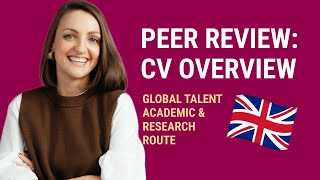
Researchers and academics in science, medicine, engineering, the humanities and the social sciences. The route has four sub-routes: three fast-track routes for people who already hold an eligible post, fellowship or grant, and the peer review route, where an endorsing body assesses your track record.
View full list of supported disciplines →Pick the path that matches where you are. Each one takes you to the free guides, blog posts and videos that fit that stage.
You are still getting to know the route: the four sub-routes, the endorsing bodies and what each one looks for.
You know this is your route and want to start putting your documents together.
You have a rejection proforma and want to build a stronger portfolio for resubmission.
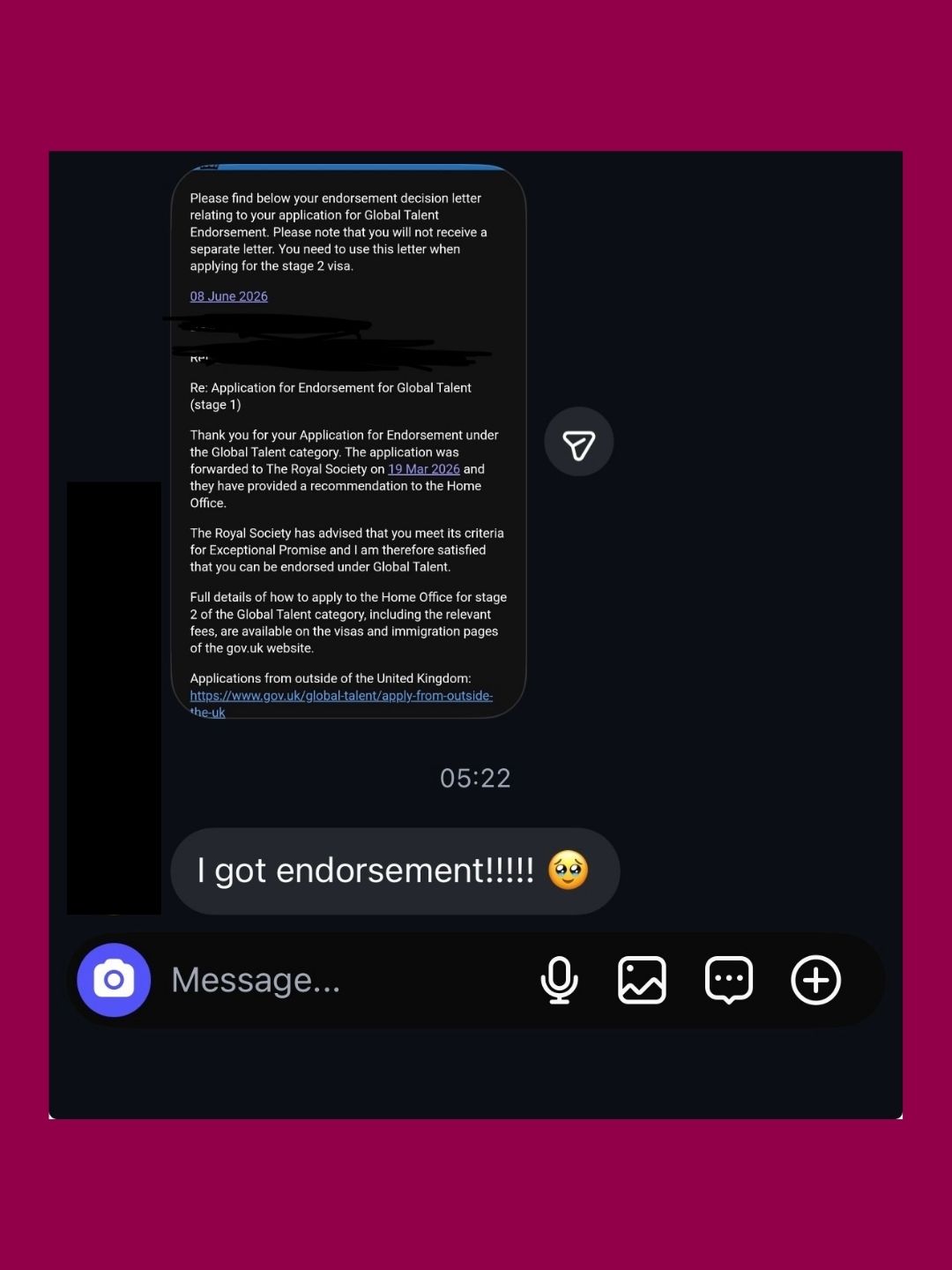
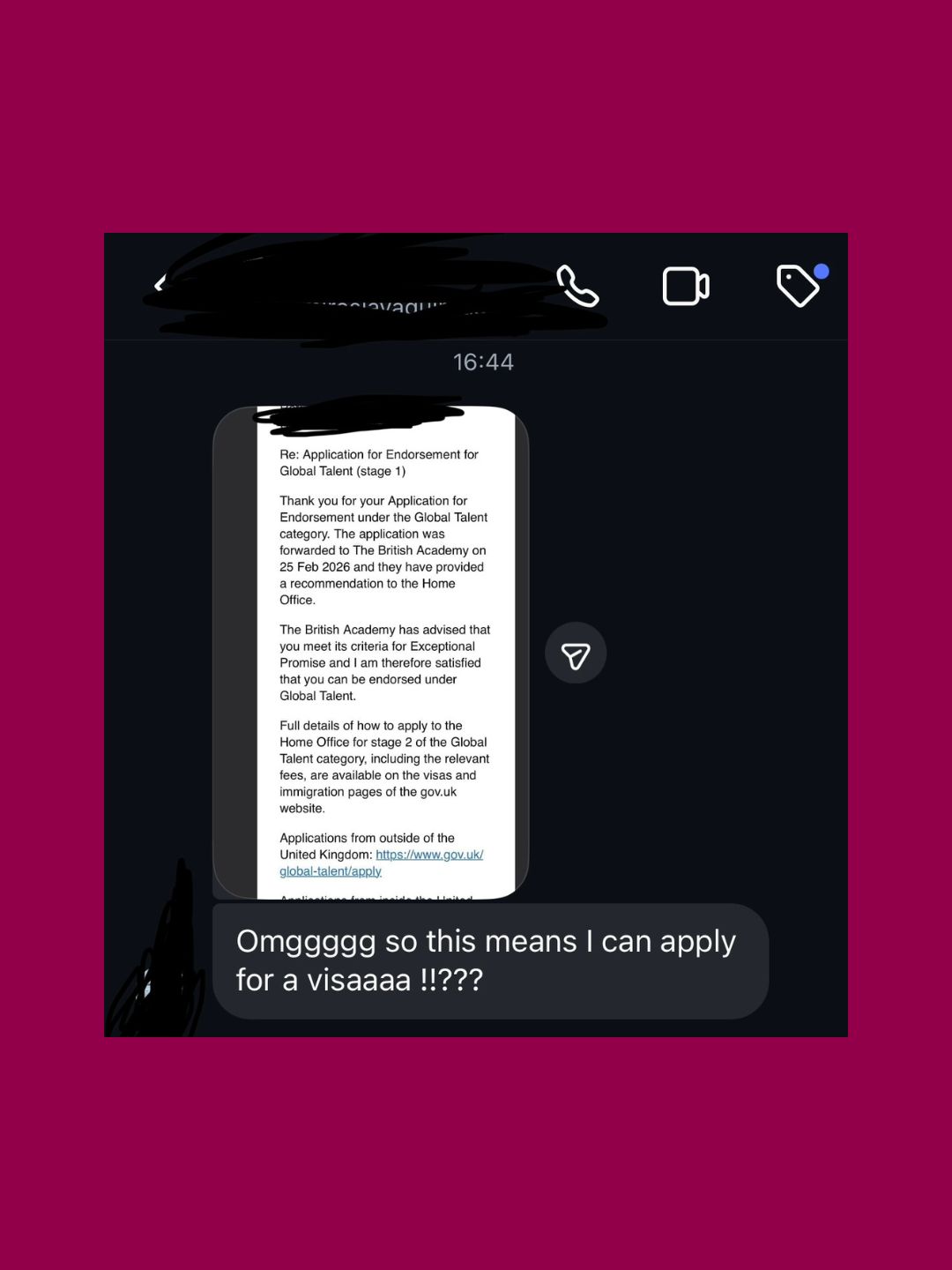
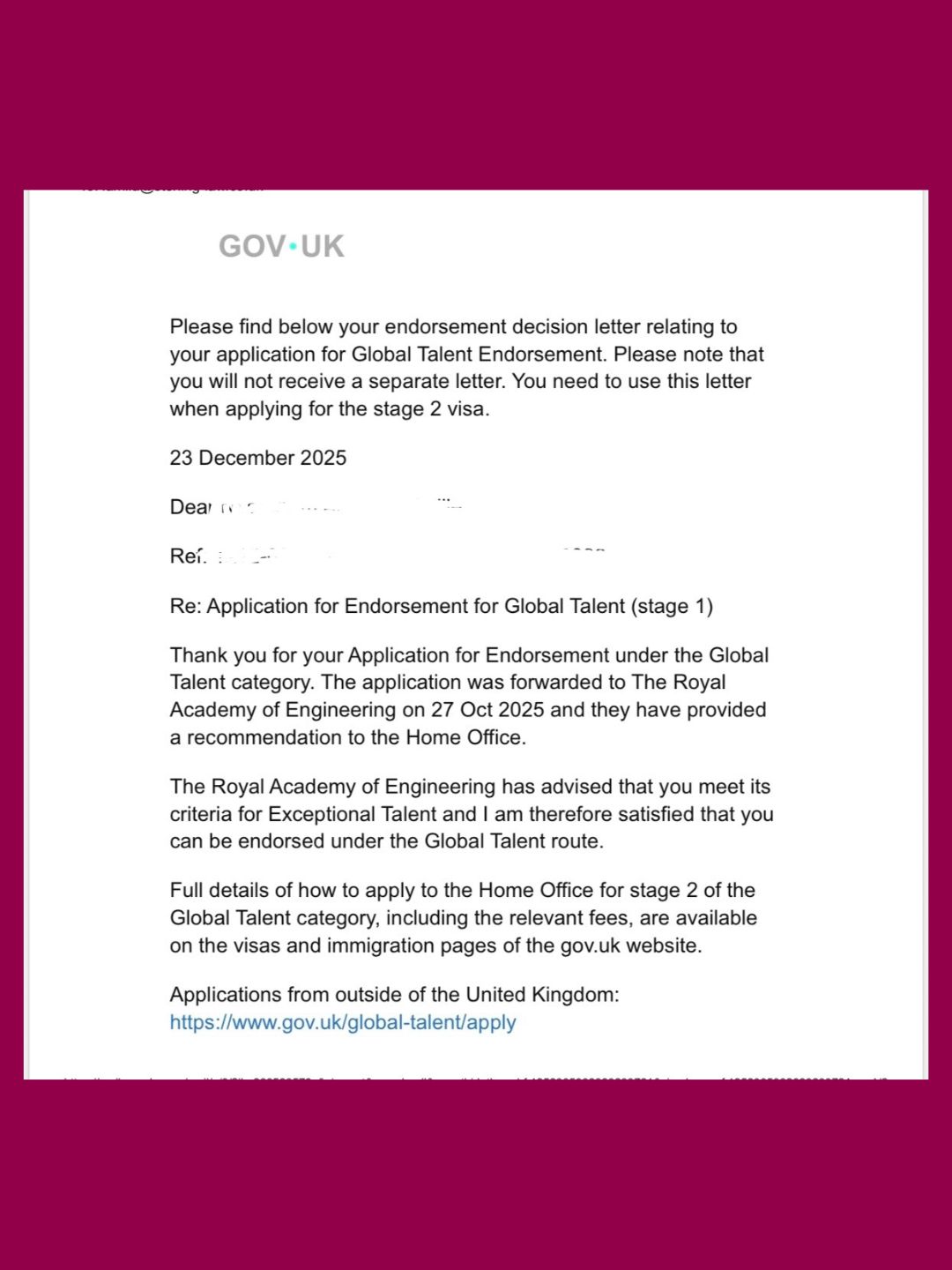
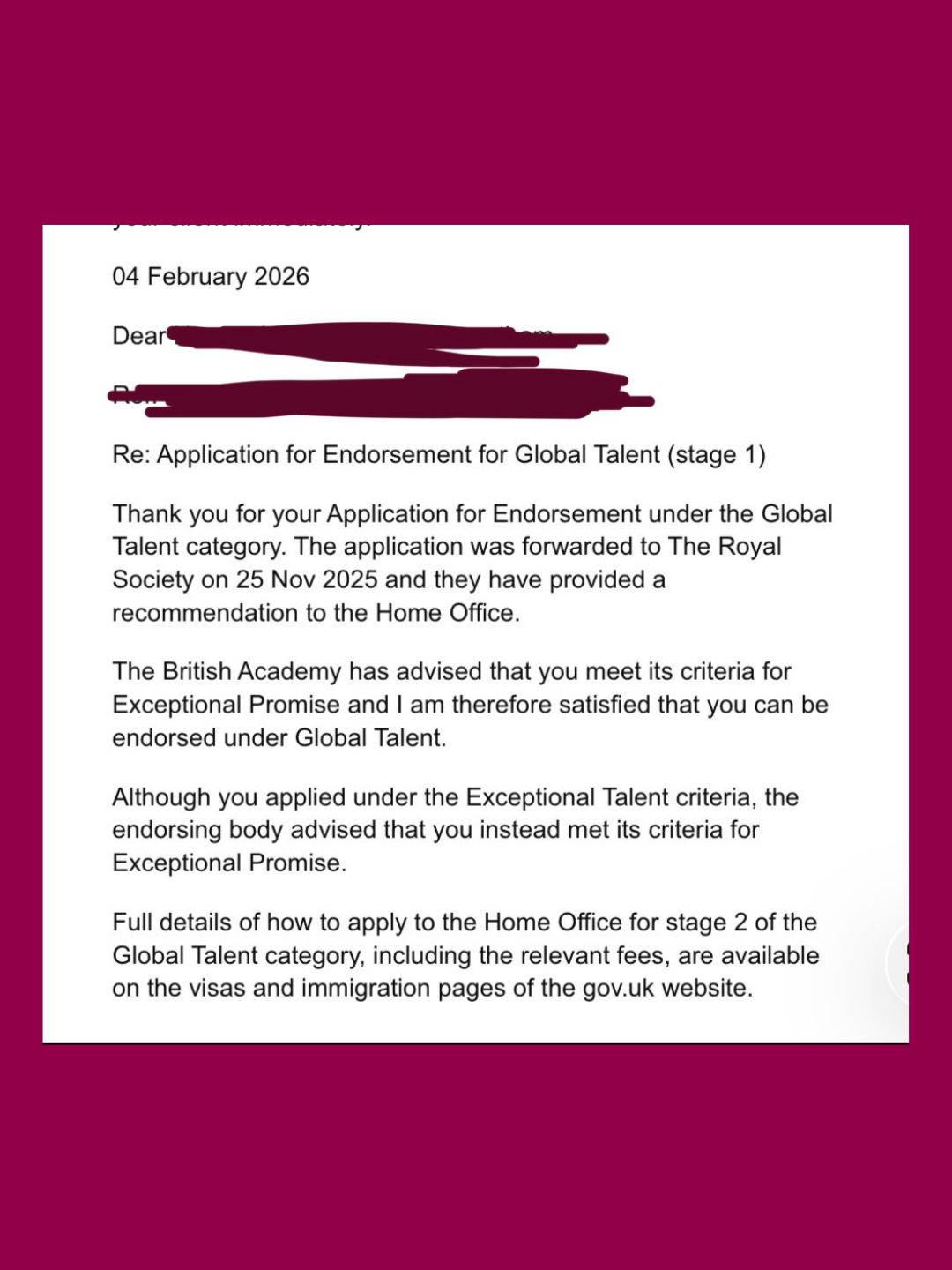
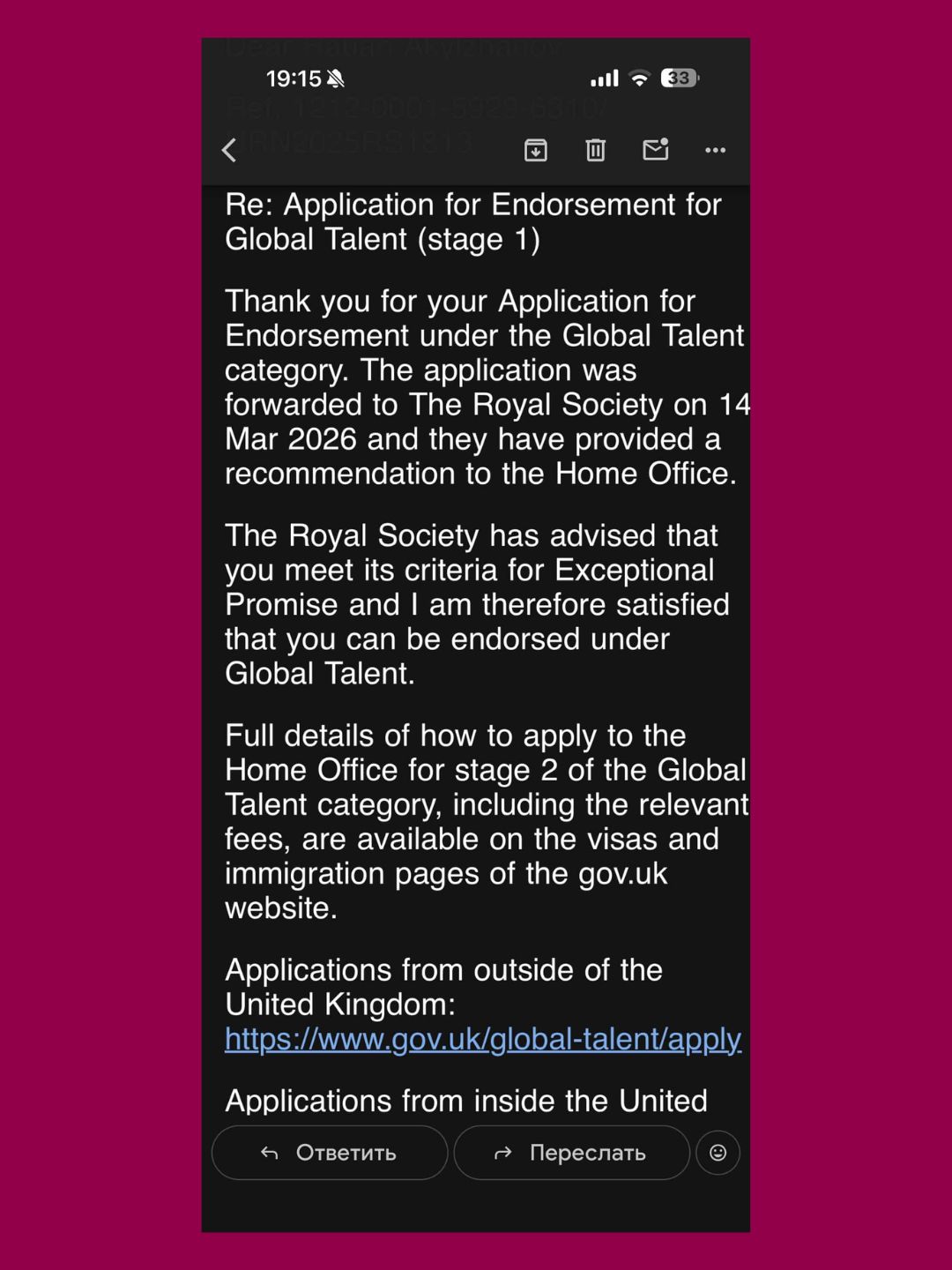
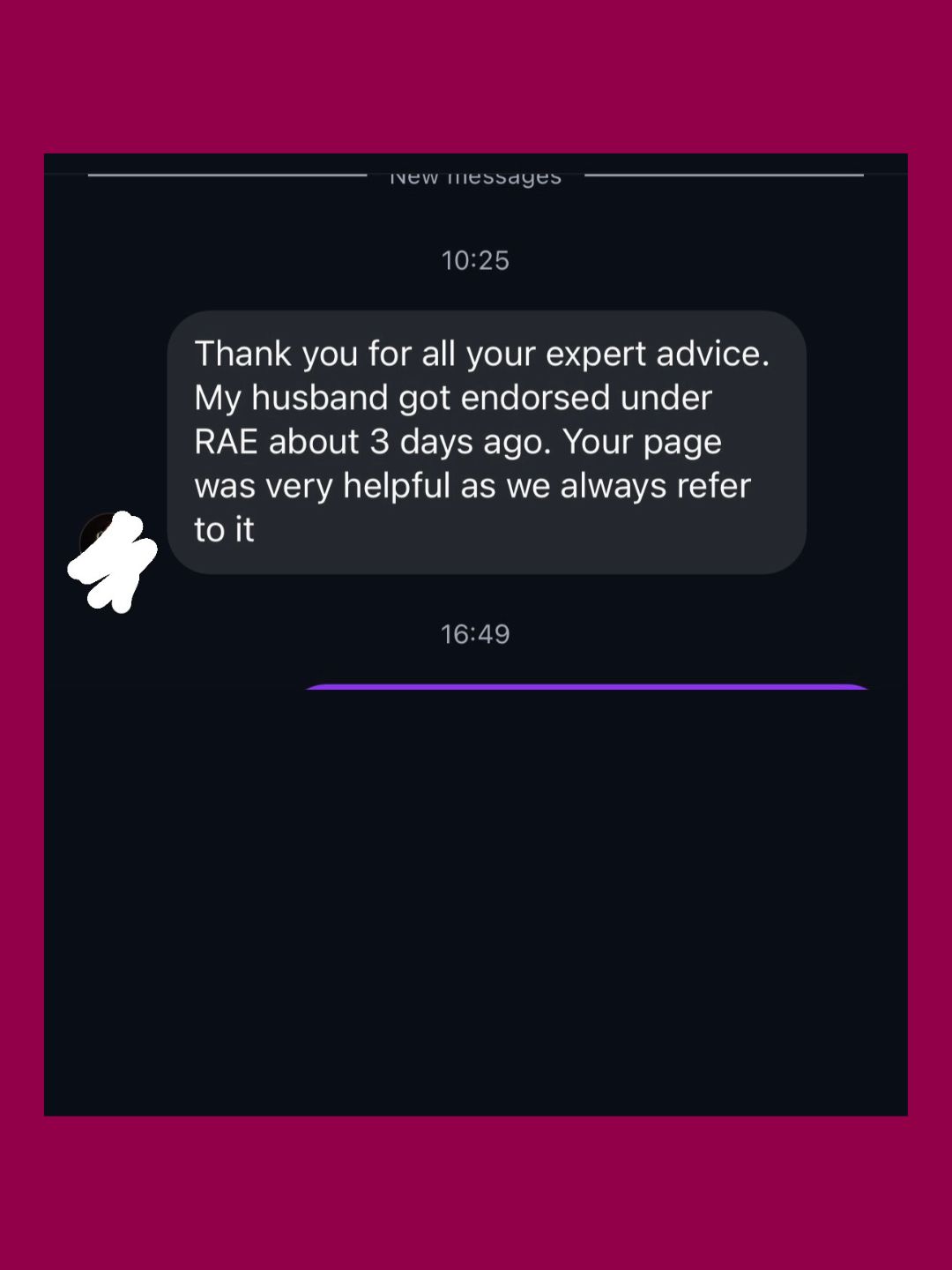
Researchers and academics endorsed after working on how their portfolio was presented.
Screenshots shared with permission. Details anonymised where required.
Everything here is free. Start with the self-check, then read the guide for an overview of the four sub-routes and the endorsing bodies.
↑ Back to the three pathsStart with the free blog posts and videos. If you want structured help, the calls and the writing service follow.
↑ Back to the three paths
▶
▶Endorsement coaching only. Not immigration advice.
Many research rejections come down to how the track record was presented, or letters that did not address the criteria. Your proforma tells you what the assessors felt was missing, which gives you a clear starting point.
↑ Back to the three pathsEndorsement coaching only. Not immigration advice.
Three are fast-track routes: academic and research appointments, individual fellowships, and endorsed funders. They are for people who already hold an eligible post, fellowship or grant. The fourth is the peer review route, where the Royal Society, the British Academy or the Royal Academy of Engineering assesses your track record, letters and evidence. The free research route complete guide covers all four.
On the peer review route, the Royal Society covers the natural and medical sciences, the British Academy covers the humanities and social sciences, and the Royal Academy of Engineering covers engineering. UKRI handles the fast-track routes. On peer review, you apply to one body only, and an endorsement application cannot be split between them. GOV.UK publishes the full list of disciplines each body covers.
Yes. On the peer review route, Exceptional Talent needs two letters from referees resident in the UK and eminent in your field, and Exceptional Promise needs one. They do not need to be British, and they do not need to have worked with you day to day, but they do need to know your work. How to find a UK referee →
You need a PhD or equivalent research experience. Equivalent usually means at least three years of consolidated full-time research, explained in a separate document. If you hold a PhD, it needs to be formally awarded before you apply.
The Peer Review VIP covers your full endorsement portfolio: portfolio strategy, an academic CV for your endorsing body, a personal statement, letters of support drafted for your referees to review and sign (two for Exceptional Talent, one for Exceptional Promise), up to seven evidence documents, and a PhD equivalent experience document if required. It starts with a 15-minute discovery call. Full package details →
Not immigration advice. This page is for informational and educational purposes only. Nothing on this page, in our guides, or in any coaching session constitutes immigration advice or regulated immigration legal advice. Elizaveta Morjan and UKGTEC (UK Global Talent Expert Coaching) Limited are not a regulated immigration law firm or adviser and do not offer or advertise immigration legal advice. The endorsement coaching and portfolio preparation services on this website relate to Stage 1 of the Global Talent process only (the professional endorsement assessment by the relevant endorsing body) and do not cover the visa application, leave to remain, immigration history, switching visa categories or any other immigration matter. For regulated immigration advice, always consult a qualified immigration lawyer or an adviser regulated by the Immigration Advice Authority (IAA).